
Pearl River County Arrest Records and Court Charges
An arrest record is the account of the arrest itself. It shows who was taken into custody, the agency that made the arrest, the booking date and time, and the initial charges listed at booking. In Pearl River County, the Sheriff's Office and the county jail hold this side of the file. A booking charge is only a starting point. It reflects what an officer wrote at intake, and it can later be changed, dropped, or replaced once a prosecutor and the courts get involved.
The court charge record is different. Once someone is arrested, the District Attorney decides the formal charges and files them with the court clerk. That filing is what turns a booking charge into a real case. The charge record then follows the case through hearings, pleas, and a final outcome. Booking and jail detail sit with the Pearl River County inmate records and jail roster. The full case file and its outcome live in the county criminal court records. The court charges after arrest are the bridge between the two.
The Pearl River County Sheriff's Department page is the public starting point for the arrest side of the record.

The Sheriff's Office is the agency tied to county booking and custody, so it is the first stop when the question is about the arrest rather than the filed charge.
How to Find Pearl River County Arrest Records and Charges
Searching here is a multi-channel process, not one database. The court case search and the clerk index show charges and charge status. The jail roster shows booking charges while a person is in custody. Mississippi Electronic Courts, known as MEC, is the statewide case-access framework, and it has been implemented for Pearl River County Circuit and County Court cases. Booking detail comes from the jail roster, not the clerk index.
- Open the court case search through Mississippi Electronic Courts, or contact the Circuit Clerk for circuit cases.
- Search by the defendant's full legal name or by the case number if you have it.
- Open the case and read the charge list, since one case can carry several separate charges.
- Check each charge for its code, severity level, and current status.
For booking charges while a person is still in the jail, the county routes users to its inmate lookup. The county inmate lookup redirect points to the Sheriff's roster vendor.
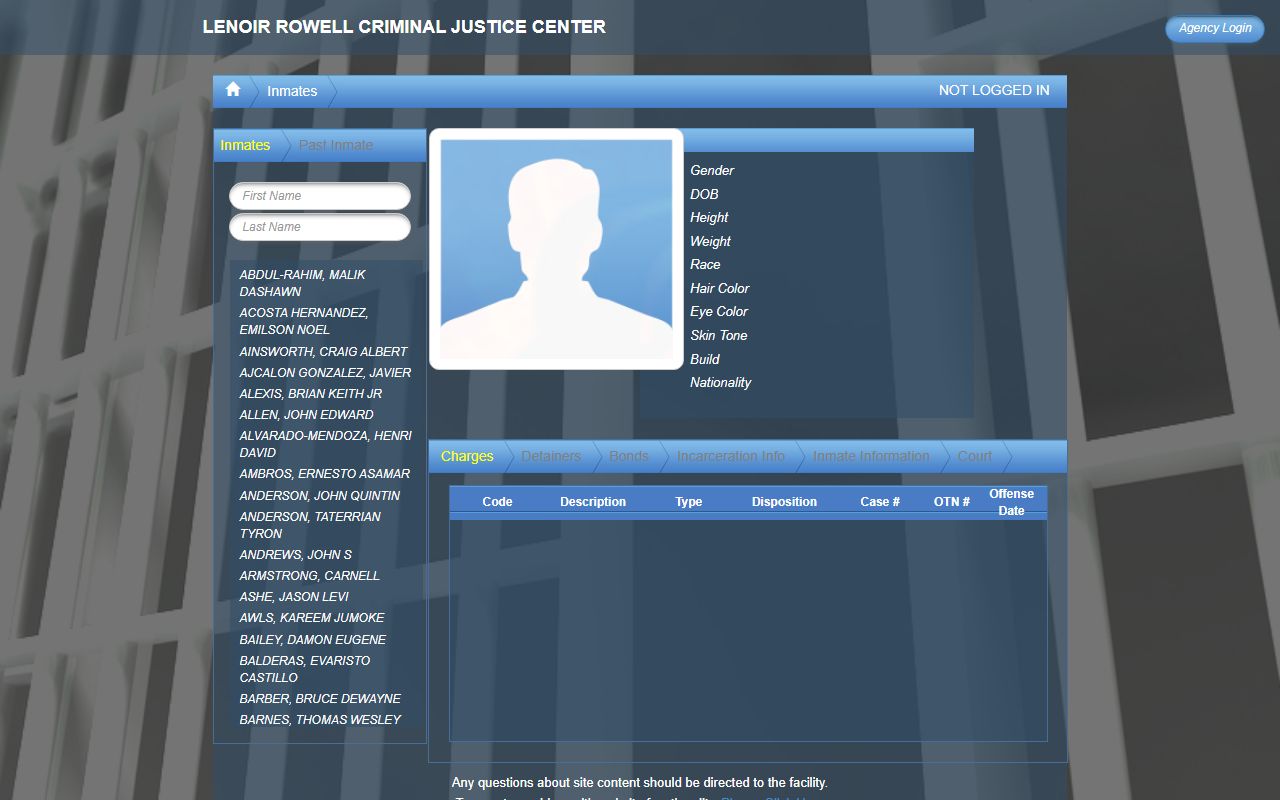
That redirect is useful when the arrest is recent and the case file has not yet been opened by the clerk.
How Charges Get Filed After an Arrest
The arrest happens first, at booking. The court charge record begins later, when a prosecutor files a charging document. That document is the legal start of the case. Mississippi uses three main types, and which one applies depends on how serious the offense is. The Fifteenth Circuit District Attorney prosecutes felony charges in Circuit Court, while lower courts handle many misdemeanors.
| Complaint | Information | Indictment | |
|---|---|---|---|
| Filed By | Officer / Prosecutor | Prosecutor | Grand Jury |
| Common For | Misdemeanors | Many felonies | Serious felonies |
| Starts | The case | The case | The case |
An indictment comes from a grand jury, which reviews evidence the Fifteenth Circuit District Attorney presents. A filed information or indictment is what changes a booking charge into a court case. The DA does not act as a records clerk, so copies of the filed charging document come from the clerk of the court where the case sits.
Charge Status and What It Means
Charges rarely stay frozen. As a case moves, a charge can be amended, reduced, added, dropped, or dismissed. The charge record shows the current status, and reading it correctly matters. A dropped charge and a conviction are very different outcomes, even though both can appear in the same file. The terms below show up often in Pearl River County charge records.
| Status | What It Means |
|---|---|
| Pending | The charge is filed and the case is still open and waiting for a hearing, plea, or trial. |
| Amended / Reduced | The charge was changed, often to a lesser offense, through plea talks or new facts. |
| Dismissed | The charge was thrown out. Dismissed with prejudice cannot be refiled. Without prejudice may return. |
| Nolle Prosequi | The prosecutor chose not to pursue the charge, which ends it for now. |
Note: A booking charge can differ from the final filed charge, so the jail roster and the court file may not list the same offense.
Charge vs. Conviction
Being charged is not the same as being convicted. A charge is an accusation. A conviction is a result, reached by a guilty plea or a verdict. Many charges never end in a conviction. Some are reduced, and some are dropped. The two are easy to confuse in a record, so the comparison below sets them apart.
| Charge | Conviction | |
|---|---|---|
| Stage | Accusation | Verdict or plea |
| Burden of Proof | Probable cause | Beyond reasonable doubt |
| Public Record | Yes | Yes |
Both a charge and a conviction can be public. The arraignment, pleas, verdict, and sentence that turn one into the other are part of the full case file. Those later stages are covered in the Pearl River County criminal court records, where disposition and sentencing live.
Sealed vs. Expunged Records
Some charge records are removed from public view. Mississippi allows expunction for certain criminal records under Mississippi Code Section 99-19-71. Sealing limits access by court order. The two are not the same. A dismissed charge does not vanish on its own, and expunction is never automatic just because a case ended.
| Sealed | Expunged | |
|---|---|---|
| Visibility | Hidden from public | Destroyed / treated as never existed |
| Law Enforcement | Limited access | Very limited |
| Eligibility | By judge's order on the file | Per Mississippi Code Section 99-19-71 |
A person seeking expunction files in the court that handled the charge and gives notice to the prosecutor. If a judge grants it under Section 99-19-71, the order directs agencies to pull the record from public access. Certified copies of the order help when a charge keeps appearing in state criminal-history channels.
Charge Codes and Severity Levels
Each charge ties to a statute, and that link is shown as a charge code. The code points to the exact law the state says was broken. Charges also carry a severity level. Felonies are the most serious, misdemeanors are lower, and minor infractions sit below that. One arrest can produce several separate charges, each with its own code and level. The booking roster lists these fields in a charges table, drawn from the Bluhorse jail management system the county uses.
The Bluhorse jail roster exposes the booking charge fields for current inmates.
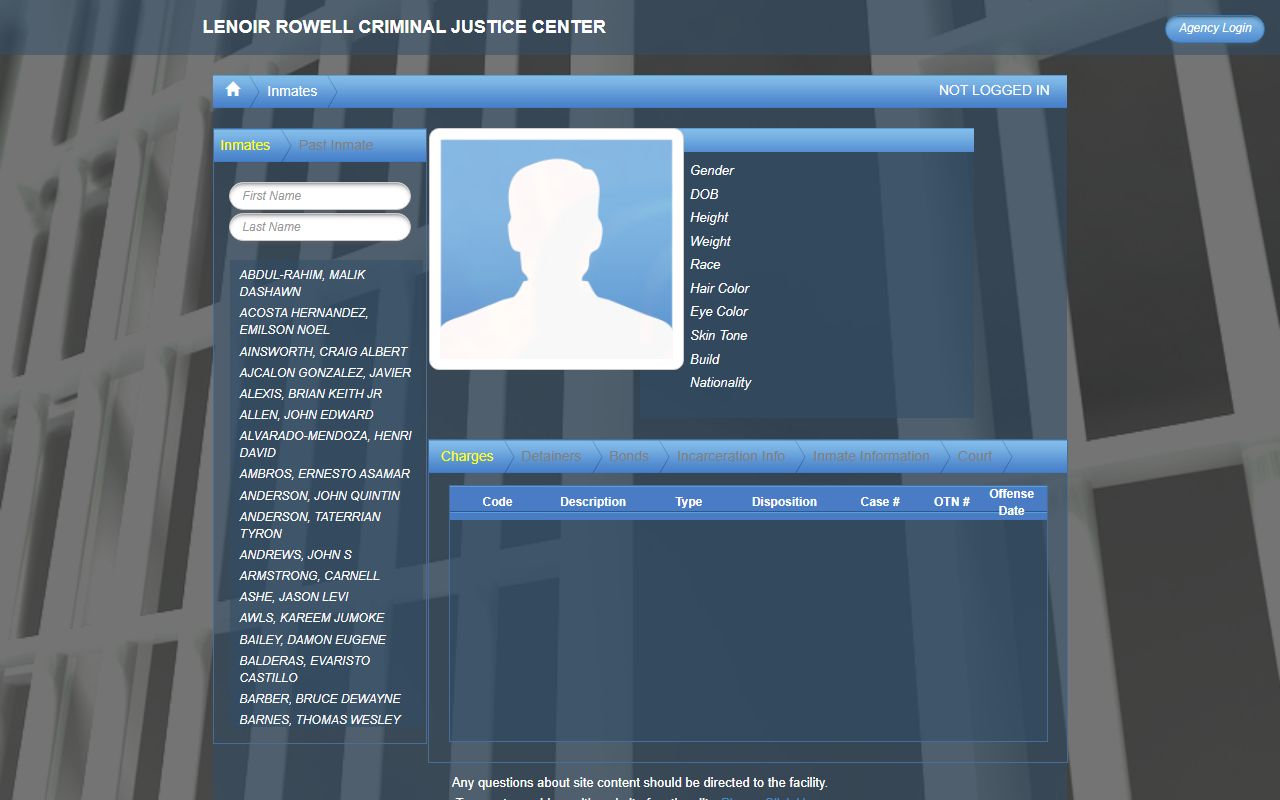
The charge fields the roster returns for a booking are listed below, which helps when comparing a booking charge to the later filed charge.
| Field | What It Shows |
|---|---|
| Code | The statute reference for the charge. |
| Description | The plain name of the offense. |
| Type | Severity level, such as felony or misdemeanor. |
| Disposition | The booking-stage status of the charge. |
| Case Number | The identifier linking the charge to a case. |
| OTN Number | The offense tracking number for the arrest. |
| Offense Date | The date the alleged offense occurred. |
Bonds, Detainers, and Holds on a Charge
A charge often comes with money or a hold attached. Bond is the amount or condition set to secure a court appearance. A detainer, sometimes called a hold, is a notice from another agency that wants custody of the person once the county is done. Both can appear next to a charge on the jail roster, and both affect whether someone is released. The roster tracks these in separate tables, though some may be secured by facility settings and not shown to the public.
- Bond fields list the agency, bond type, bond amount, and bond status.
- Detainer fields list the description, the agency, the bond amount, and the bond type.
- A hold from another county or the state can keep a person in jail even after a local charge clears.
- Bond information may update on its own schedule, apart from the court docket.
Because the roster and the court file update separately, a posted bond may show in one place before the other. When the numbers do not match, the Adult Detention Center and the court clerk are the offices to call for the current figure.
Statewide Charge and Criminal History Lookups
County records are only part of the picture. Charges can roll up into statewide systems once a case moves or a sentence is imposed. The Mississippi Department of Corrections lists people sentenced to state custody, which is separate from a county booking. The state sex offender registry lists registrants by name and location. Neither is a county jail roster, and both serve a narrower purpose than a full criminal-history check.
The MDOC public inmate locator covers people sentenced to the state prison system.

If a person is moved to MDOC after sentencing, the county roster may stop showing them, so the state locator becomes the right tool.
The Mississippi Sex Offender Registry is a separate statewide search for registrants. For older or sealed material, the clerk that owns the file remains the official source. Mississippi's Public Records Act, set out in Section 25-61-1, favors access to public records unless the law provides otherwise.
Background Check Considerations
A casual lookup is not a formal background check. A regulated background check follows the federal Fair Credit Reporting Act and uses approved sources. Reading a charge record online tells you what was filed, but it does not confirm a final outcome or clear someone of an old charge. Public-record copies from a clerk may carry charges that were later dismissed or expunged elsewhere but never updated on a private site.
Important: This site is not a consumer reporting agency under the FCRA, and its information cannot be used for employment, credit, housing, or insurance decisions.
Restricted Charge Records in Pearl River County
Not every charge is open to the public. Youth Court charges are confidential under Mississippi Code Section 43-21-261, so a juvenile arrest or charge usually will not appear in a public search. Sealed charges need a court order before the clerk can release them. Expunged charges should no longer show in ordinary lookups, though courts may keep limited internal access. Active investigations and unexecuted search warrants may also be withheld.
Dismissed charges can still appear in a file until they are expunged, which surprises many people. The clerk can confirm whether a record is public, but may not hand over a restricted file without proof of identity, party status, or a court order. The youth-court confidentiality rule is set in Section 43-21-261, and inspection and copying of open records follow Section 25-61-7. When a charge is not online, the right move is to ask the clerk that owns the file whether it is public and how to get a certified copy.