
What Probate Covers in Pearl River County
Probate handles what happens to a person's property and obligations after death. In Pearl River County it covers wills offered for probate, estate administrations, and the appointment of someone to manage the estate. The same process also reaches living people through guardianships and conservatorships. These cases produce inventories, appraisals, accountings, creditor notices, and the final orders that close an estate. Each filing builds a public file that tracks how an estate moved from opening to distribution.
Mississippi does not run a stand-alone probate court. Probate in Pearl River County is a Chancery Court function, and the Chancery Clerk is the office that keeps the files. The same clerk maintains land records, divorce files, and county board records. A person looking for an estate, a will, or a guardianship should start with the Chancery Clerk rather than the Circuit Clerk. The Pearl River County Chancery Court hears the matter, and the clerk records and certifies every paper filed in it.
The Chancery Clerk page lists the office menus for chancery court, land records, and court filing fees. Pearl River County users can reach the Chancery Clerk office online before deciding what to request. Anyone confirming that an estate exists, that a guardian was named, or that an estate has closed starts at that office.
Reviewing the Chancery Clerk page first shows which services the office groups together. A look at the official page sets expectations about what probate access in the county does and does not include.
The screenshot below shows that landing page and its record menus.
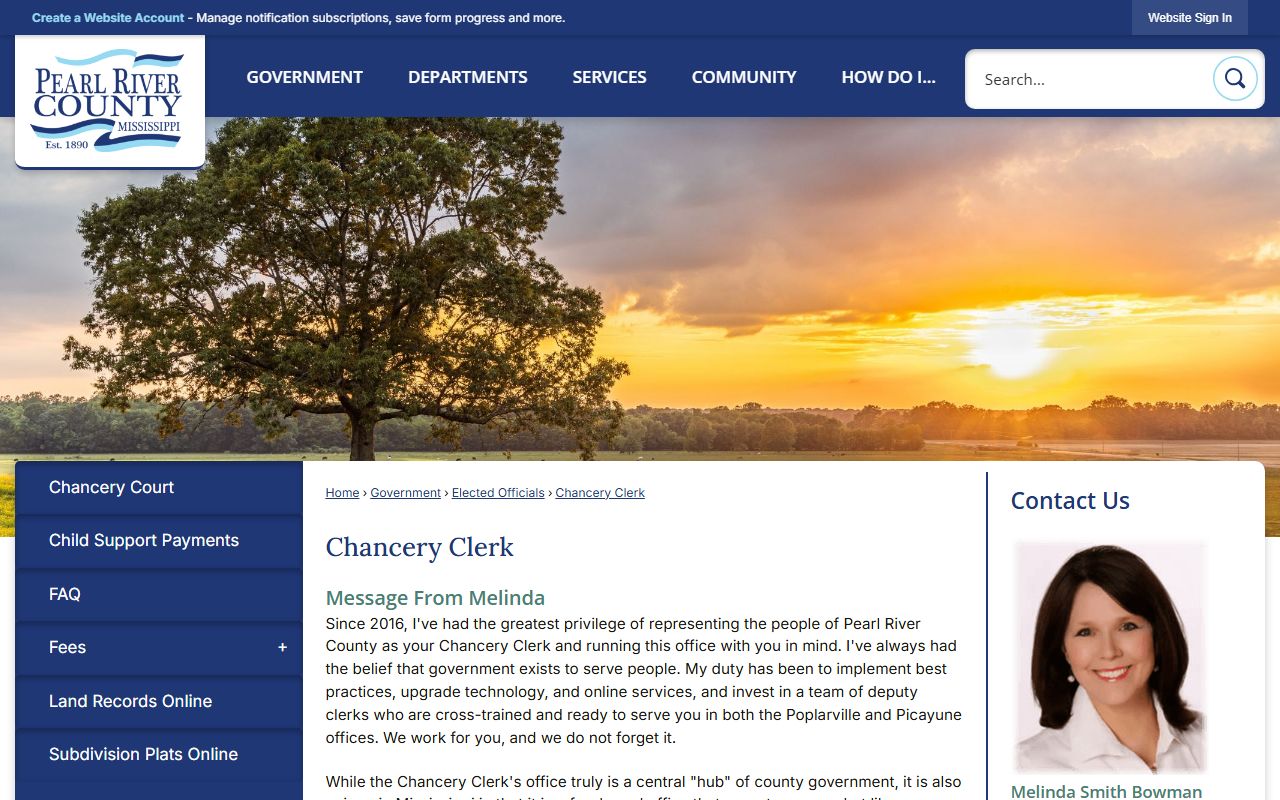
That page is the starting point for estate file searches, certified copies, and questions about older probate records held only on paper.
Probate Terms Defined
Estate files use words that rarely appear in daily life. A short glossary helps a reader understand a docket entry, an order, or a notice without a lawyer at hand. The terms below come up in almost every Pearl River County estate or guardianship case.
- Testator
- The person who made the will. The will speaks for the testator after death and names how the estate should pass.
- Executor
- The person named in a will to carry out its terms. The court issues letters that give the executor power to act for the estate.
- Intestate
- Dying without a valid will. State law then decides who inherits, and the court appoints an administrator instead of an executor.
- Guardianship
- A court-supervised role that protects a minor or an adult who cannot care for their own person or property.
- Conservatorship
- Court-supervised management of the property and financial affairs of a person found unable to handle them alone.
These roles all answer to the chancellor. Each fiduciary must file reports, and those reports become part of the estate record.
How to Search Pearl River County Probate Records
Probate records in Pearl River County are not held in one public database. The county does not publish a dedicated online probate search. Estate files live with the Chancery Clerk, and most access still runs through that office in person, by mail, or by phone. Related land transfers from an estate can be checked through the Chancery land-records portal, which is separate from the estate file itself.
A short, ordered approach keeps a search on track and avoids the wrong counter.
- Gather the basics. Have the deceased person's full legal name, the approximate year of death, and the names of heirs or the named executor ready before you ask.
- Contact the Chancery Clerk. Call or visit the office to confirm that an estate, will, or guardianship file exists and whether it is open or closed.
- Ask about copies. Request a plain copy to read or a certified copy for legal use, and confirm the current fee and payment method first.
- Check related land records. Use the Chancery land-records web inquiry for deeds or property transfers tied to the estate.
- Expect limits on protected files. Guardianship, conservatorship, minor, and sealed material may require party status or a court order.
Mississippi Electronic Courts may carry some chancery case information for participating courts, but full document access can require registered or clerk access. For certified estate copies, the Chancery Clerk remains the official source.
Pearl River County Chancery Court and Clerk
Two offices anchor probate work in the county. The Chancery Court is the equity court that hears estates, guardianships, and conservatorships. The Chancery Clerk serves as clerk of that court and keeps the files, issues certified copies, and answers in-person and mailed requests. The Picayune Chancery Clerk office is the practical counter for estate searches and copies.
Pearl River County Chancery Clerk
917 Goodyear Boulevard
Picayune, MS 39466
601-749-7734
Monday to Friday, 8 a.m. to 5 p.m.
Pearl River County Chancery Court
Tenth Chancery Court District
Picayune and Poplarville, MS
601-403-2572
Hours follow county court schedules
The Chancery Clerk also handles divorce and custody files, which sit alongside probate in the same equity court. Marriage and divorce searches in the county appear in the Pearl River County marriage and divorce records section, while the clerk's broader role is covered with the county clerk records pages.
Note: Pearl River County sits in the Tenth Chancery Court District, so a chancellor may sit in more than one county within that district.
Pearl River County Probate Filing Fees
Chancery filing fees in Pearl River County are set by the court and posted on the county fee pages. Some probate amounts are published in full, while estate-opening and certified-copy charges are best confirmed with the Chancery Clerk before filing. The county documents a flat probate accounting filing fee and a separate uncontested adoption fee, both effective January 1, 2020.
The fee page below lists chancery filing amounts and links the official PDF.
A quick look at the Pearl River County court filing fees page confirms the chancery probate accounting total.
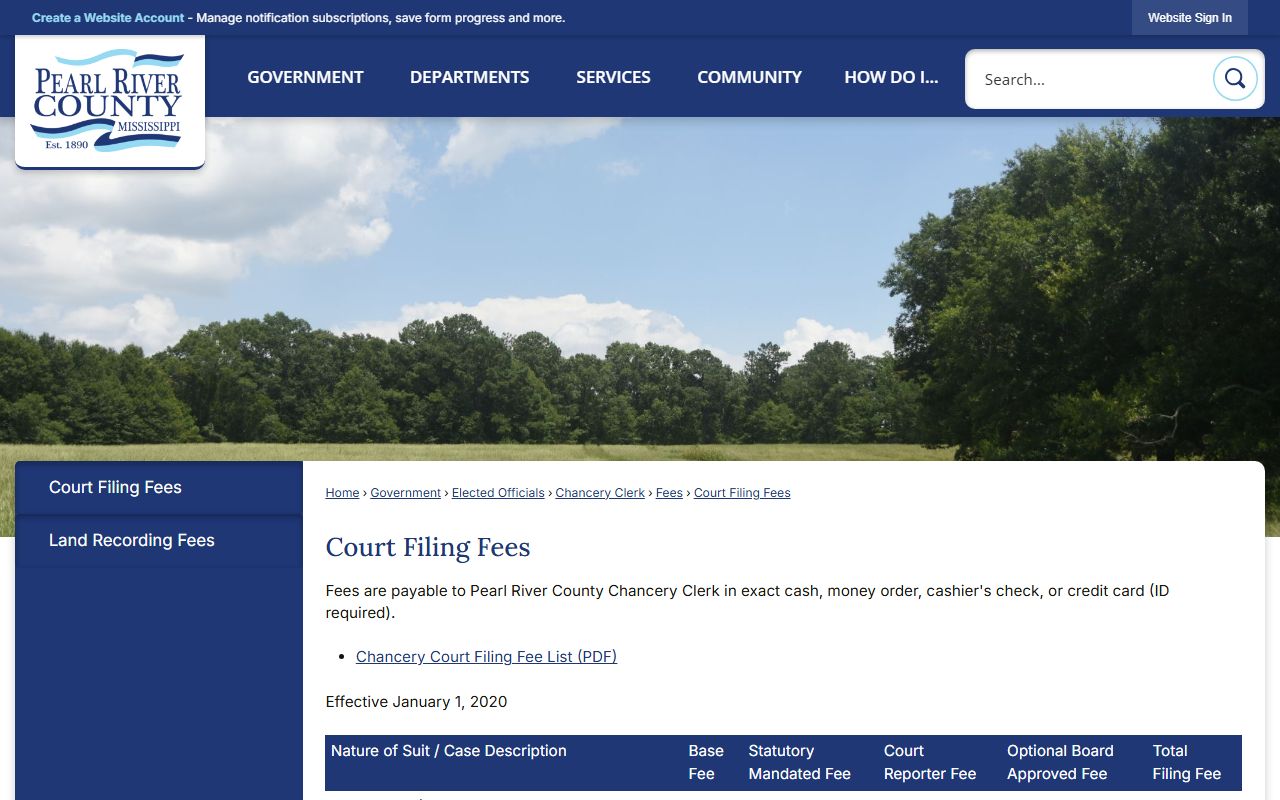
The table draws on those published chancery amounts and on the land-record copy fees the Chancery Clerk charges.
| Item | Amount |
|---|---|
| Chancery probate accounting filing | $158 total (eff. Jan. 1, 2020) |
| Uncontested adoption filing | $148 total (eff. Jan. 1, 2020) |
| Estate opening filing fee | Confirm with the Chancery Clerk |
| Certified copy | Confirm with the Chancery Clerk |
| Land-record copy made by public in office | $0.25 per page |
| Land-record copy made by staff | $0.50 per page |
| Online copy service fee | 3.5%, $2.00 minimum |
Estate matters often touch land, so recording fees for deeds and property transfers may apply on top of the probate filing.
The county land recording fee page sets those amounts for documents recorded in the estate.
Estate property transfers fall under the Pearl River County land recording fees schedule.
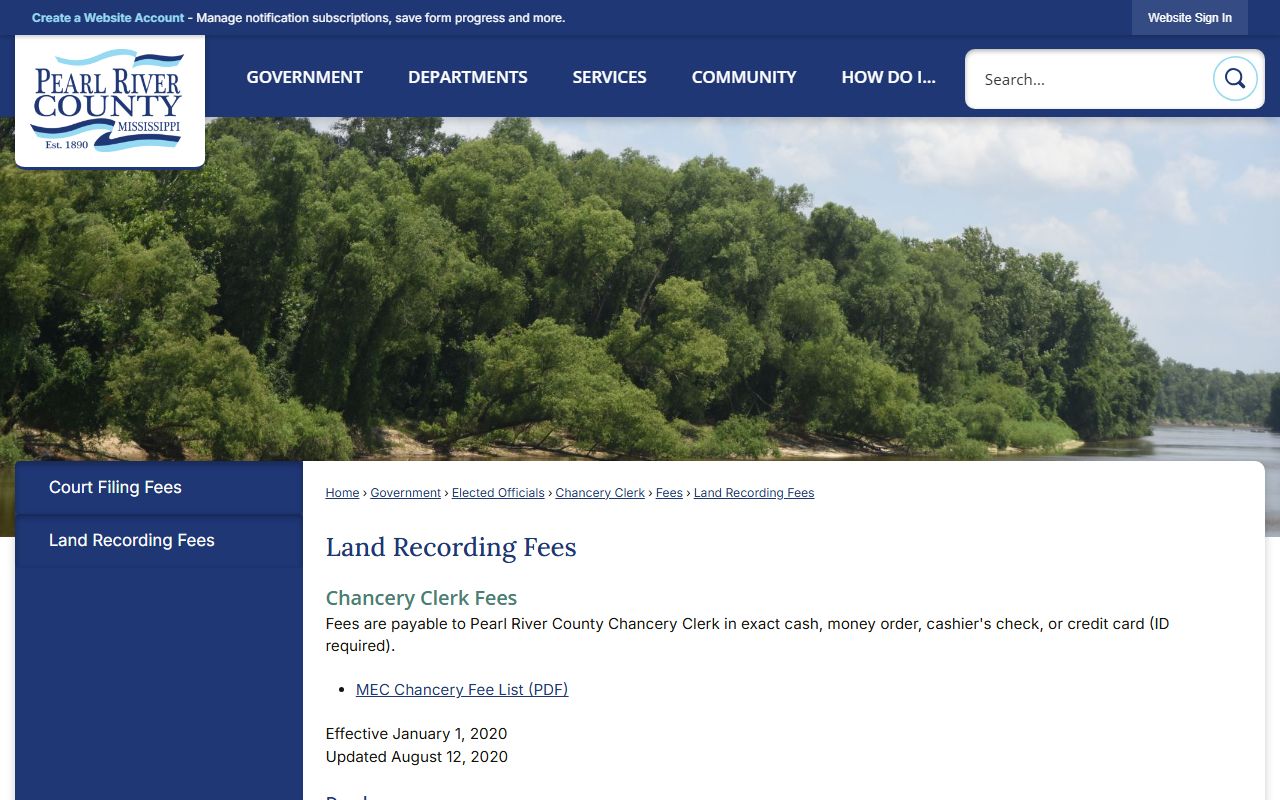
Anyone selling estate land or recording a new deed after distribution should plan for those recording costs.
How Probate Works in Pearl River County
An estate moves through set stages from opening to closing. The chancellor supervises each step, and the Chancery Clerk records the filings along the way. The path below reflects how a full estate proceeds in the county.
- Decide on the right path. Determine whether a full estate is needed or whether a small-estate affidavit or other statutory alternative may apply.
- Collect the key facts. Locate the will, death certificate, asset information, heirs, creditors, and the proposed fiduciary.
- File the petition. Open the case with the Chancery Clerk and Chancery Court.
- Get the fiduciary appointed. Ask the court to name an executor, administrator, guardian, or conservator and to issue letters.
- Give required notice. Notify heirs and creditors as the law directs, including any published notice.
- Manage the estate. Inventory property, collect assets, pay valid claims, sell property only if authorized, and account to the court.
- Close the estate. Distribute remaining assets and request discharge and a closing order.
Note: An estate can stay open for months or longer while creditor periods run and accountings are reviewed, so docket gaps are normal.
What Pearl River County Probate Records Show
A probate file is a running record of how an estate was handled. It begins with the will or the petition that opens the case and grows as the fiduciary acts. Pearl River County estate files commonly hold wills admitted to probate, petitions for letters testamentary or administration, and orders appointing the executor, administrator, guardian, or conservator. Oaths and fiduciary bonds appear early, followed by the inventory and any appraisals.
Later filings track the financial life of the estate. These include creditor notices, proof of publication, claims against the estate, and accountings that show money in and out. Petitions to sell property, heirship determinations, and the final closing order round out a complete file. Guardianship and conservatorship cases add annual reports and accountings, though those carry extra confidentiality.
Probate often connects to recorded land. A copy request may need both the estate file and a land record.
The Chancery land-record copy FAQ explains how those copies are priced and accessed.
The Pearl River County Chancery land-record copy FAQ sets the per-page and online copy fees for estate-related documents.
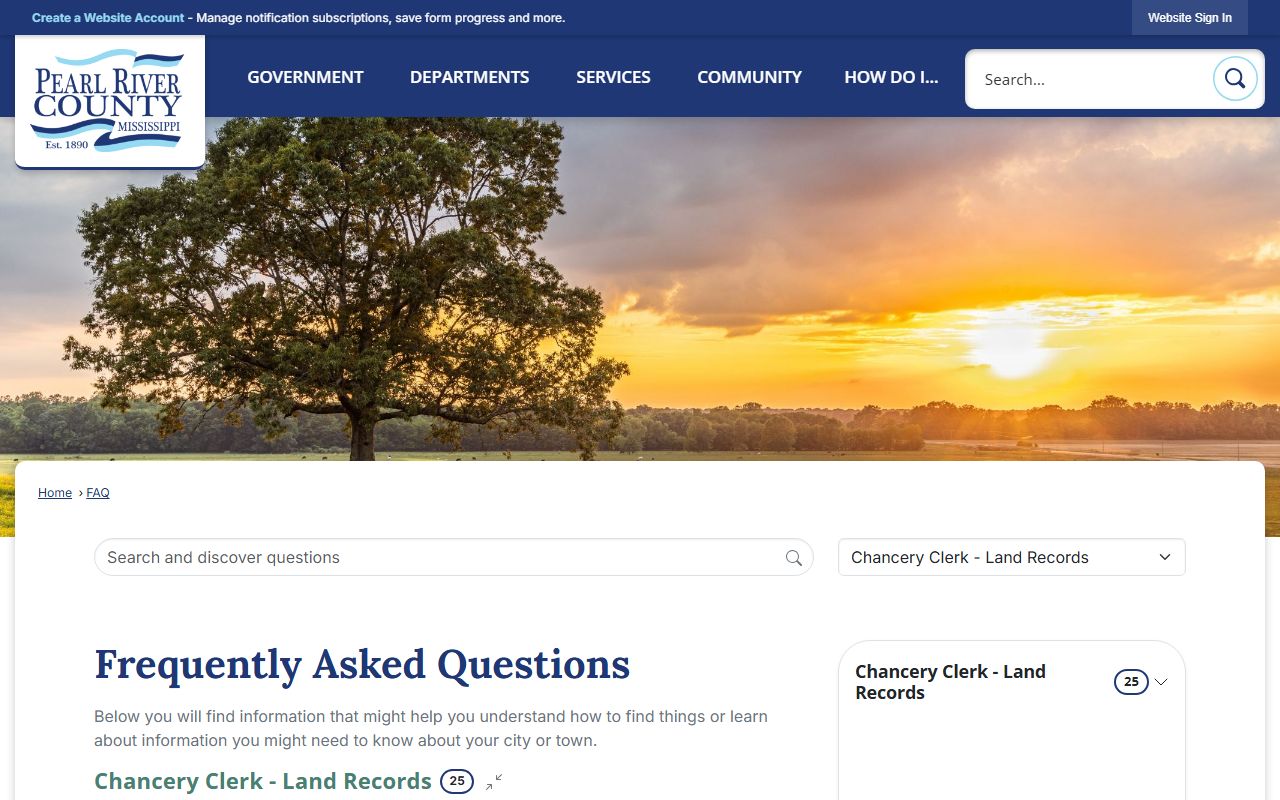
That FAQ confirms that an online printout is not the same as a certified copy from the clerk.
Small Estates in Pearl River County
Not every estate needs a full administration. Mississippi law allows a small-estate affidavit when the value of the estate falls under the statutory limit and other conditions are met. This route can let heirs collect certain assets without opening a complete estate. It saves time and cost when the estate is modest and uncontested.
The small-estate option is set out in Mississippi Code Section 91-7-145. The statute lists the dollar threshold, the waiting period after death, and the sworn statements an heir must make. A bank or other holder of assets may ask for the affidavit before releasing funds.
The Chancery Clerk can confirm whether an affidavit fits a given situation. For larger or disputed estates, a full probate before the chancellor is usually the safer course.
Restricted Pearl River County Probate Records
Not all of a probate file is open to the public. Parts of an open estate may be public, but the court protects sensitive material. Guardianships, conservatorships, and matters involving a minor's property carry added confidentiality. Medical information and sealed disputes are also held back from ordinary inspection.
Personal identifiers within an estate file may be redacted. The clerk may hide Social Security numbers, account numbers, full birth dates, and the addresses of protected persons. A person seeking a restricted file may need to show party status, a court order, or proof of identity before the clerk releases it.
Mental-health and protected-person details follow medical-privacy rules, so the public side of a guardianship or conservatorship is limited by design. The Chancery Clerk can explain the access rule for a specific file, but the office cannot waive a court-ordered seal. For broader context on how chancery files fit the wider court system, the county court records overview ties probate to the other record types in Pearl River County.
Note: A dismissed dispute or a closed estate does not always mean the full file is open, since sealed exhibits and protected data can remain restricted.